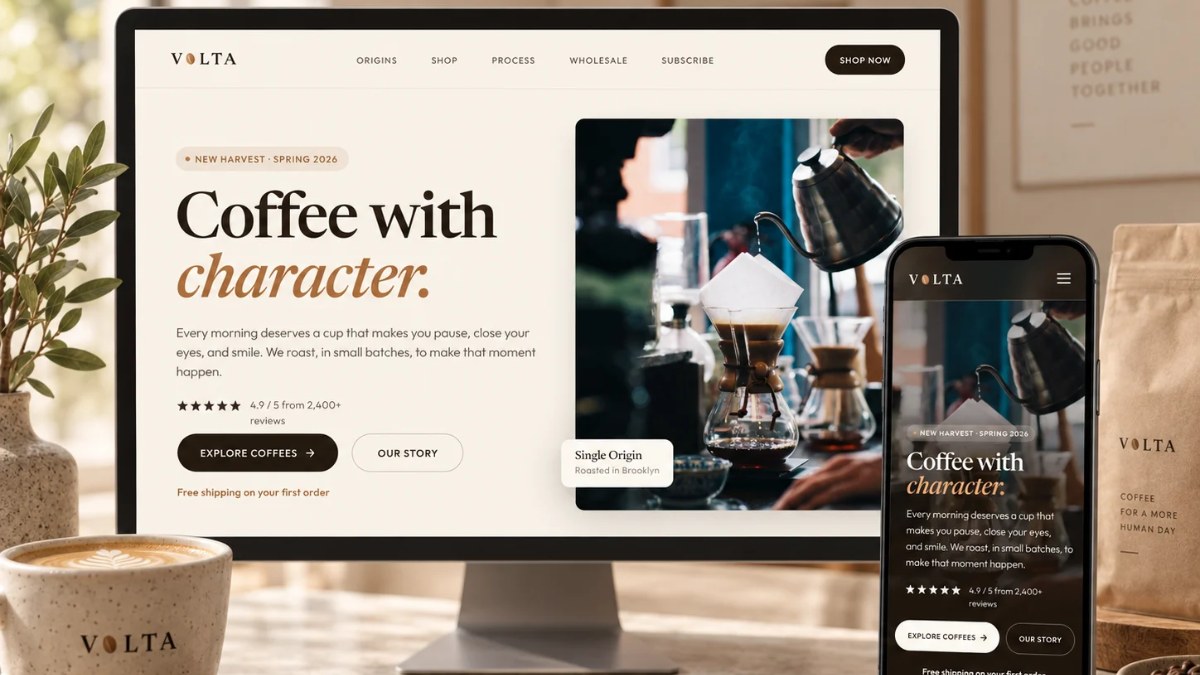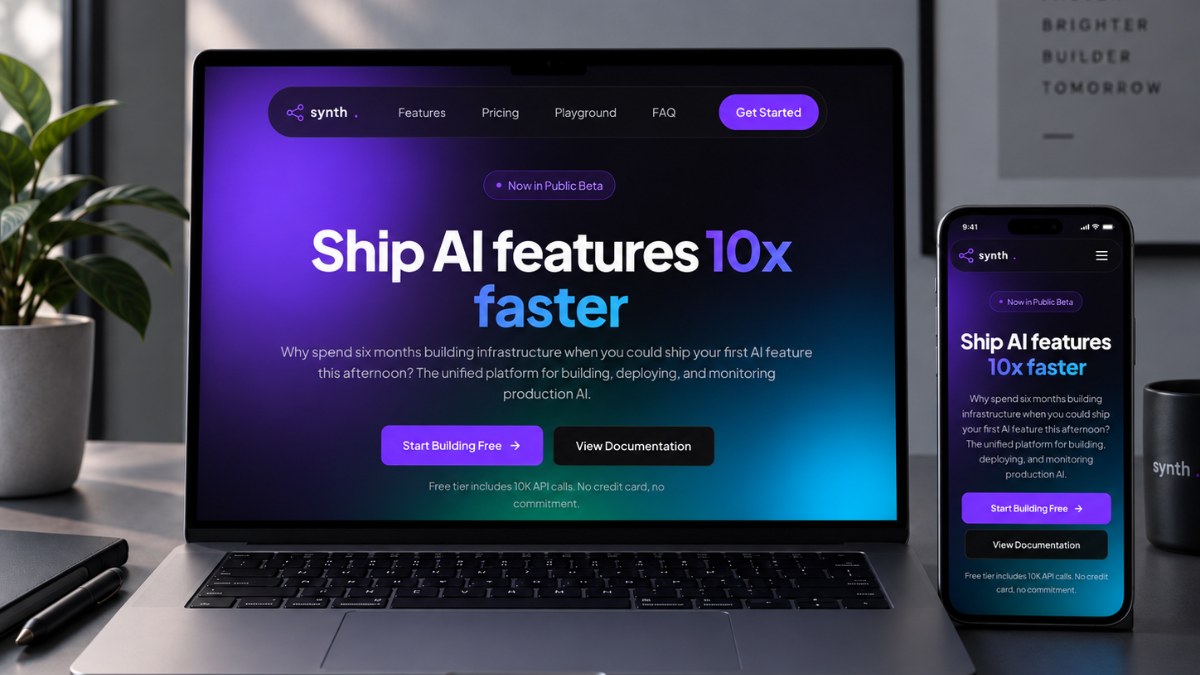
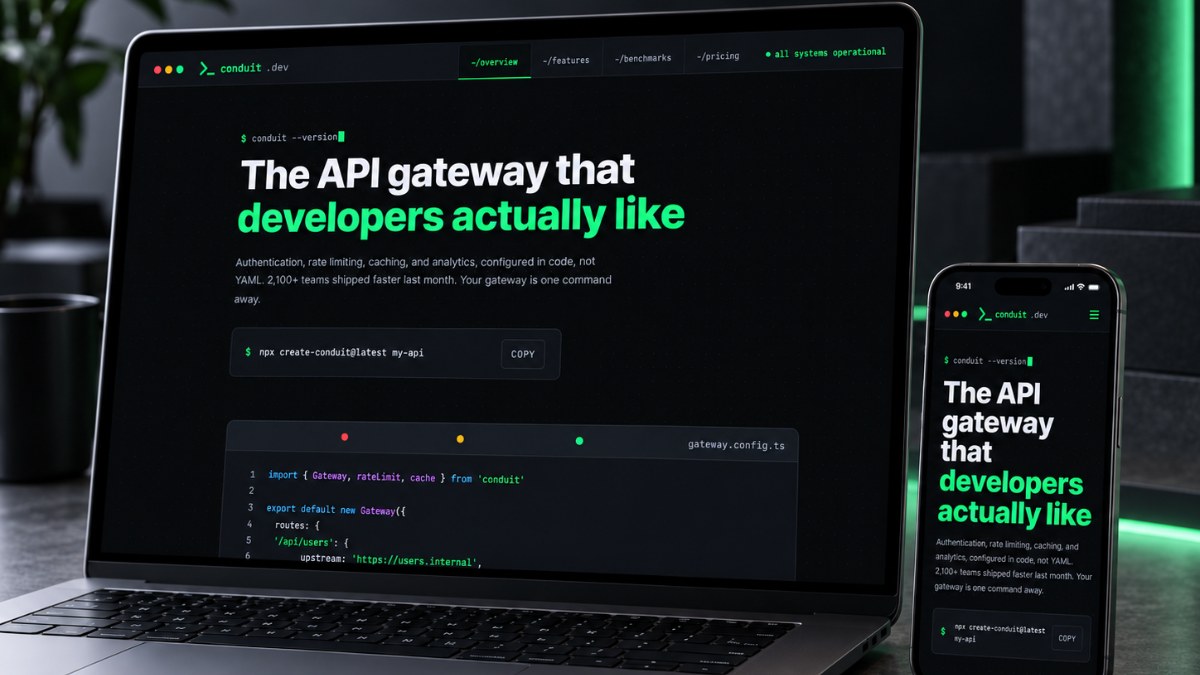
Accepting Q3 2026 projects

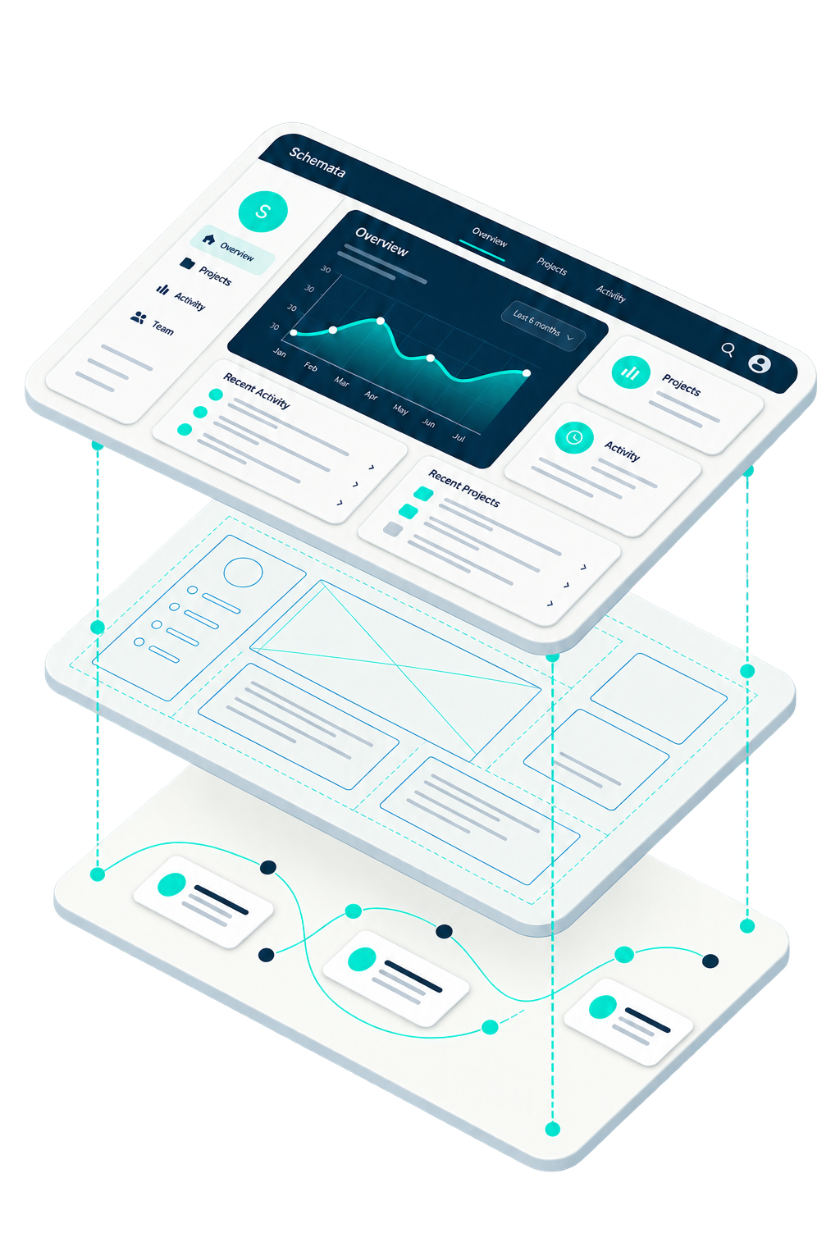
Beautiful design, built around
human behavior

We design websites, brands, and digital experiences shaped around how people understand, navigate, decide, and act. Our work has reached billions at Meta, LinkedIn, Coinbase, and beyond.

40+Clients
12Fortune 100 clients
96%Client retention
Learn more

Trusted by product teams at

Meta LinkedIn Coinbase Yahoo Walmart eBay Hyundai
Our approach

Good design looks right.
Great design works right.

Most studios optimize for aesthetics. We optimize for understanding, applying cognitive science to every decision, from information architecture to button placement. The result isn't just beautiful work. It's measurable growth.

Learn how we think

Cognitive load theory

Fewer choices, clearer paths, faster decisions.

Fitts's law & hierarchy

Sizing and weight calibrated to how eyes scan and hands reach.

Evidence-based persuasion

Social proof and commitment patterns validated at Fortune 10 scale.

What we do

What we bring to
every engagement

Behavioral design & HCI

Our signature. Cognitive psychology applied to drive measurable action.

Core expertise

Web design & development

Custom websites built on research, not assumptions.

App design (iOS & Android)

Mobile-first product design grounded in habit science.

UX / UI design

Strategy, interfaces, and systems validated at scale.

Brand & visual identity

Identities that feel inevitable and unmistakably yours.

Conversion optimization

Hypotheses rooted in science, measured relentlessly.

Selected work

Results speak louder than portfolios
LinkedIn Hiring Assistant
LinkedIn

Designing LinkedIn's first AI agent

LinkedIn Desktop
LinkedIn

Reimagining the recruiter experience

LinkedIn Mobile
LinkedIn

Hiring on the go, 60% faster

Intuit Assist
Intuit

An AI copilot for tax experts

Intuit Recommended Response
Intuit

Empathy at scale through AI

Intuit Design System
Intuit

Building the AI design system

Virtual Expert Portal
Intuit

Redesigning the expert platform

VEP 3.0 Concept
Intuit

Envisioning the next-gen dashboard

Learning Academy
Intuit

Turning learners into experts

Coinbase Onboarding
Coinbase

Simplifying business onboarding

Coinbase Team Accounts
Coinbase

Team accounts for enterprise crypto

Facebook Profiles
Meta

Reimagining profiles for billions

Yahoo Homepage
Yahoo

A homepage people come back to

SmugMug Checkout
SmugMug

From 7 steps to 3, +8% conversion

The selected work above includes projects completed by our team prior to the founding of Schemata Creative, and is presented to showcase the experience, craft, and thinking behind the studio.

Process

Six phases, zero guesswork

01

Discovery & strategy

Behavioral research and goal mapping before a single pixel is placed.

02

UX architecture

Information architecture, flows, and wireframes informed by HCI principles.

03

Visual design

High-fidelity mockups, prototypes, and design system foundations.

04

Development Scale + Enterprise

Pixel-perfect, responsive implementation. Performance as a feature.

05

Testing & optimization Scale + Enterprise

Usability testing and behavioral analytics. A/B experimentation available on Scale and Enterprise tiers.

06

Launch & support

Deploy, monitor behavioral metrics, and keep refining.

About us

Founded on research.
Driven by craft.

We built Schemata Creative after years at Meta, LinkedIn, and Coinbase, shaping products for billions. We saw an industry that made things beautiful but rarely asked why a design works. So we built a studio grounded in the science of how people think.

Founded by a Nielsen Norman Group Master Certified practitioner with a degree in psychology and a specialization in human-computer interaction, Schemata Creative brings 15+ years of behavioral design experience at Fortune 100 companies to every engagement. We don't rely on design intuition. We apply the actual science of how people perceive, decide, and act.

This isn't a philosophy we adopted. It's where we come from. Every framework we apply, from cognitive load theory to persuasion architecture, is grounded in academic training and validated through enterprise-scale implementation.

By the numbers

40+Clients
12Fortune 100 clients
96%Client retention
Client outcomes

What our partners say

"Schemata Creative fundamentally changed how users interact with our platform. Within the first quarter, we saw activation rates climb in ways that years of internal iteration hadn't achieved. Their behavioral approach surfaced problems we didn't even know existed."
Sarah ChenVP Product, Healthcare SaaS
+43% Activation
"What sets them apart is that they explain why every decision works. Not just visually, but cognitively. Our engineering team finally understood the reasoning behind design choices, which made implementation smoother and the results more consistent."
Marcus RodriguezCEO, Fintech Startup
2.1M Users
"We went through three agencies that focused on aesthetics. Schemata Creative was the first team that focused on actually understanding our users. They brought research and behavioral frameworks that gave us confidence every decision was backed by evidence."
Aisha PatelFounder, E-Commerce Brand
+67% AOV
"New users now complete setup in under two minutes. That was a problem we fought for over a year internally. Their team identified the exact cognitive bottlenecks in our onboarding and redesigned the flow in a way that felt obvious in hindsight."
David KwonCPO, Enterprise Software
-58% Task time
"They handed us a behavioral framework that our product team still uses to evaluate every new feature. It changed how we think about design decisions and gave us a shared language for talking about user psychology across departments."
Rachel ItoDir. Product, Social Platform
10K+ Apps
"Our checkout went from seven steps to three, and the ROI paid for itself in the first month. But the real value was the framework they left behind. We now apply those same behavioral principles to every new feature we ship."
James WhitfieldGrowth, D2C Marketplace
-34% Abandonment
Pricing

Transparent investment,
measurable returns.

Ongoing design requests like logos, pitch decks, landing pages, and brand assets. Each request is delivered individually. Not for full website or app builds.

Standard

One designer, steady output.

$4,500/mo
  • 1 active request at a time
  • 5-day turnaround per request
  • Behavioral design methodology
  • Web & mobile assets
  • Source files included
  • Async comms
  • Pause or cancel anytime
Get started
Most popular

Pro

Priority queue, dedicated designer.

$8,500/mo
  • 2 active requests at a time
  • 48hr turnaround per request
  • Dedicated senior designer
  • Behavioral reviews
  • Usability testing
  • Weekly calls
  • Dev-ready assets
  • Pause or cancel anytime
Get started

Scale

Full partnership with consulting.

Custom
  • Everything in Pro
  • Development
  • Behavioral audits
  • A/B testing & CRO
  • Strategy sessions
  • Dedicated team
  • Custom SLA
Book a call

Complete website, app, or product builds with full UX strategy and behavioral design from start to finish.

Starter

Single landing page, conversion-focused.

$5,000+
  • One page, responsive
  • Behavioral audit
  • Behavioral design methodology
  • 2 revision rounds
  • 2–3 weeks
Get started
Most popular

Growth

Multi-page site or app with full UX strategy.

$15,000+
  • Multi-page site or app
  • UX strategy & research
  • Behavioral design
  • Interactive prototype
  • Design system
  • 4 revision rounds
  • 4–8 weeks
Get started

Enterprise

Full product build with ongoing consulting.

Custom
  • Full design + strategy
  • Behavioral audit
  • HCI consulting
  • Design system
  • Dev support
  • Ongoing optimization
  • Dedicated team
Book a call
Why us

Better design.
Half the cost.

See how Schemata Creative compares to hiring a full-time principal designer.

Full-time principal designer

  • Base salary$180K–$200K/yr
  • Benefits & taxes+$40K–$60K
  • Equipment & software+$5K–$8K
  • Total annual cost$225K–$268K
  • Limited to one skillset
  • PTO, sick days, ramp-up time
  • Management overhead
  • Recruiting & retention costs
  • Monthly plan$8,500/mo
  • Benefits & taxes$0
  • Equipment & software$0
  • Annual cost$102,000/yr
  • Behavioral design + UX + brand + CRO
  • No downtime, pause or cancel anytime
  • Zero management needed
  • Fortune 100 experience from day one
You save $123K–$166K/yr
Contact us

Let's create something people genuinely love to use.

Tell us what you're building. We respond within 24 hours with an honest assessment. If we're not the right fit, we'll point you to someone who is.

FAQ

You're probably wondering

Most agencies design based on trends and visual intuition. We design based on how the brain actually works. Our team holds advanced degrees in behavioral psychology and human-computer interaction, and we apply peer-reviewed research (cognitive load theory, Fitts's Law, persuasion architecture) to every decision. The result is work that doesn't just look exceptional, it measurably converts. Our clients see an average 40% improvement in their target metric within the first 90 days.

We do: Web design & development, mobile app design (iOS & Android), UX/UI design, behavioral design & HCI consulting, brand & visual identity, conversion optimization, design systems, landing pages, prototypes, and A/B testing strategy.

We don't do: 3D modeling, video production, physical product design, copywriting-only projects, or social media content management. Not sure if we're a fit? Reach out and we'll tell you honestly.

Think of it as having a senior behavioral designer on your team, without the overhead of a full-time hire. You submit design requests through a shared board, and we work through them one (Standard) or two (Pro) at a time. Turnaround is 5 business days for Standard, 48 hours for Pro. You can pause or cancel anytime. No long-term commitment. No hidden fees. Most clients find the monthly plan pays for itself within the first month through conversion improvements alone.

A focused landing page or single-feature redesign typically takes 2–3 weeks. A multi-page site or app with full UX strategy runs 4–8 weeks. Enterprise-scale product design with behavioral consulting can span 2–6 months. We scope every project with a detailed timeline before starting, so there are no surprises. We also build in behavioral validation checkpoints. We don't just hand off designs, we confirm they work with real users before delivery.

Both, and everything in between. We've designed for 12 Fortune 100 companies including Meta, LinkedIn, and Intuit, and we've also helped early-stage startups find product-market fit through behavioral design. The science of how people decide and act is the same whether you have 100 users or 100 million. Our approach scales to your stage: startups get lean, high-impact sprints; enterprises get the depth and rigor their stakeholders require.

Every engagement follows our six-phase framework: Discovery (behavioral research and goal mapping), UX Architecture (flows and wireframes grounded in HCI), Visual Design (high-fidelity mockups and prototypes), Development (available on Scale and Enterprise tiers), Testing (usability testing and behavioral analytics, with A/B experimentation on higher tiers), and Launch & Support (deploy, measure, iterate). We don't skip the research phase. It's what separates work that looks good from work that actually performs.

We define success metrics before we design a single screen. Depending on your goals, we track conversion rates, activation rates, task completion time, NPS, engagement depth, or retention. We set up measurement frameworks during discovery so we can validate the impact of every design decision. Our clients don't wonder if the investment worked. They see it in the data. That's also why 96% of them come back for more.

Every project includes built-in revision rounds (2 for Starter, 4 for Growth, unlimited for monthly plans). But honestly, revisions are rarely about starting over. Our research-first process means we align on direction before investing in high-fidelity work. Monthly clients can pause or cancel anytime. For project-based work, we offer a satisfaction checkpoint after the first major milestone. If the direction isn't right, we course-correct before going further.

You do. 100% ownership transfers to you upon final delivery. All source files, fonts, and assets are included. We'll never reuse your designs or claim any rights. Your work is yours.

LinkedIn Hiring Assistant AI agent interface design
·2024-2025·9 months·6 min read

LinkedIn's first AI agent: zero to 57% adoption

57%Adoption rate
+6%Revenue lift (QoQ)
$230KNew tier revenue

We led product design for Hiring Assistant, LinkedIn's first AI-powered agent. Over nine months, we took the product from initial vision through launch, working across design strategy, prototyping, research, and delivery. The project earned LinkedIn's Company Innovation Award.

The Challenge

LinkedIn Recruiter was experiencing inconsistent and inefficient hiring workflows. Non-recruiter hiring managers faced long time-to-post, low confidence in candidate quality, and limited engagement with advanced tools.

This mattered because hiring friction directly influences job posting revenue, customer retention, and perceived platform value. The goal was to design an AI-powered assistant that reduced cognitive load, accelerated decision-making, and increased hiring confidence while preserving human control.

Our Approach

In early workshops, the team generated dozens of ideas for reimagining the hiring journey with AI. We aligned around a core principle: simplicity, clarity, and confidence. The AI should empower managers, not replace them.

To validate value quickly, we advocated for a constrained MVP focused on three capabilities: AI-generated job drafts, automated candidate sourcing, and ranked applicant screening. This allowed us to test behavioral shifts without over-investing in unproven workflows. During a closed beta with high-value customers, we discovered that users wanted more manual control, reposting needed to be easier, and ranking credibility was a critical gap with nearly 80% of applicants labeled "Top Match."

These findings drove a fundamental pivot. Phase 2 shifted from automation-first to collaboration-first, introducing guided review flows, "Why this candidate?" reasoning modules, and refined matching logic that prioritized quality over volume.

What We Delivered

Design Strategy

Defined the product vision and aligned stakeholders around structured augmentation. Created high-level concept prototypes that secured executive buy-in before production work began.

User Research

Ran a closed "Friends and Family" beta, gathering qualitative and quantitative feedback from high-value customers. Findings directly reshaped the Phase 2 design direction.

UX/UI Design

Designed the end-to-end hiring assistant across two phases: a constrained MVP for validation, then a collaboration-first experience with guided review flows and candidate reasoning modules.

Design System

Helped develop a new agentic design system defining reusable AI behavior patterns and interaction standards across LinkedIn's growing suite of AI products.

The Results

The product reached a 57% adoption rate across LinkedIn's recruiter base. Job posting revenue increased 6% quarter-over-quarter. The Promoted Plus tier generated $230K in new revenue. The project earned LinkedIn's Company Innovation Award.

LinkedIn recruiter workflow with behavioral design patterns LinkedIn AI agent candidate recommendation screen LinkedIn Hiring Assistant progressive disclosure UI LinkedIn Hiring Assistant candidate sourcing LinkedIn Hiring Assistant interface detail
DisclaimerThis project was completed by members of the Schemata Creative team during prior roles before the formation of Schemata Creative. Schemata Creative was not the contracting agency or vendor for this engagement. All work shown here represents the design contributions, creative direction, and professional experience that inform the studio's approach.

Explore more of our work

LinkedIn desktop recruiting interface with cognitive hierarchy
·2024·Part of 9-month engagement·3 min read

Hiring assistant, desktop experience

57%Adoption rate
+6%Revenue lift (QoQ)
40%Faster evaluation

We designed the desktop experience for LinkedIn's Hiring Assistant, structuring candidate evaluation around how recruiters actually scan and compare information. The result was a 40% reduction in evaluation time while maintaining hiring quality.

The Challenge

Desktop recruiters evaluate hundreds of candidates daily. The existing interface forced constant context-switching between candidate profiles, job requirements, and communication tools, creating decision fatigue and slowing evaluation time.

This fragmentation compounded over each shift. Recruiters lost minutes per candidate navigating between tabs and reassembling context, and the cumulative effect was slower pipelines, lower throughput, and inconsistent evaluation quality across teams.

Our Approach

We structured candidate information using F-pattern eye-scanning research, placing the most decision-relevant data along natural scan paths. Visual hierarchy was calibrated using size, weight, and contrast to guide attention to qualification signals first.

We applied Hick's Law to reduce the number of simultaneous choices presented at any step. A persistent comparison view eliminated tab-switching entirely, keeping job requirements visible alongside candidate profiles so recruiters could evaluate without losing context.

The layout was validated through moderated usability sessions with active recruiters, and we iterated on information density until evaluation speed and comprehension both improved.

What We Delivered

Candidate Evaluation Interface

A structured desktop layout that surfaces qualification signals along natural scan paths and supports side-by-side comparison without tab-switching.

Cognitive Hierarchy System

A visual weight system that prioritizes decision-relevant data using size, contrast, and spatial grouping calibrated to F-pattern scanning behavior.

Persistent Context Panel

A fixed sidebar displaying job requirements alongside candidate profiles so recruiters never lose sight of evaluation criteria.

The Results

Recruiters evaluated candidates 40% faster while maintaining hiring quality. The desktop experience contributed to the overall 57% adoption rate and 6% quarter-over-quarter revenue lift across the platform.

LinkedIn candidate evaluation dashboard design LinkedIn recruiter desktop workflow UX design
DisclaimerThis project was completed by members of the Schemata Creative team during prior roles before the formation of Schemata Creative. Schemata Creative was not the contracting agency or vendor for this engagement. All work shown here represents the design contributions, creative direction, and professional experience that inform the studio's approach.

Explore more of our work

LinkedIn mobile recruiting AI agent interface
·2025·Part of 9-month engagement·3 min read

Hiring assistant, mobile experience

57%Adoption rate
60%Faster swipe-to-action

We designed the mobile companion to LinkedIn's Hiring Assistant, rethinking candidate evaluation for one-handed use. Swipe-based interactions replaced multi-click workflows, reducing action time by 60% while matching the desktop adoption rate.

The Challenge

Mobile recruiters need to make quick decisions with limited screen space. The desktop experience could not simply scale down. Touch targets, information density, and gesture patterns all required rethinking for mobile-first recruiting workflows.

Recruiters frequently reviewed candidates during commutes, between meetings, or while away from their desks. The mobile experience needed to support confident decision-making in brief, interruptible sessions without sacrificing the depth available on desktop.

Our Approach

We applied Fitts's Law to optimize touch target placement within the natural thumb zone. All primary actions were positioned in the lower third of the screen where single-hand reach is easiest, and secondary actions were tucked behind progressive disclosure.

Information was surfaced progressively, showing the most decision-relevant candidate details first and revealing depth on demand. Swipe gestures replaced multi-click workflows, giving recruiters a physical sense of momentum as they moved through candidate queues.

The single-hand interaction model was validated through guerrilla testing with recruiters using the app in transit, confirming that all critical flows could be completed without two-handed input.

What We Delivered

Swipe-Based Evaluation

A gesture-driven candidate review flow that replaced multi-tap workflows with intuitive swipe actions for shortlisting, passing, and saving candidates.

Thumb-Zone Layout

A mobile layout engineered around Fitts's Law, placing all primary actions within comfortable single-hand reach.

Progressive Candidate Cards

Candidate summaries that surface key qualification signals first, with expandable sections for deeper detail on demand.

The Results

Swipe-to-action time was reduced by 60%. The mobile experience maintained the same 57% adoption rate as desktop, confirming that the behavioral design patterns translated effectively across form factors.

LinkedIn mobile candidate review with Fitts's Law optimization LinkedIn mobile hiring assistant thumb-zone UX design
DisclaimerThis project was completed by members of the Schemata Creative team during prior roles before the formation of Schemata Creative. Schemata Creative was not the contracting agency or vendor for this engagement. All work shown here represents the design contributions, creative direction, and professional experience that inform the studio's approach.

Explore more of our work

Intuit Assist AI copilot interface for tax experts
·2023-2024·9 months·6 min read

AI copilot that lifted NPS 12 points

+12NPS increase
-15 minAvg. help time
88%Expert engagement
-28%Hold time

We led product design for Intuit Assist, an AI copilot that integrates directly into expert workflows for TurboTax and QuickBooks. Over nine months, we designed the experience across three phases of each customer interaction, lifting NPS 12 points and cutting average help time by 15 minutes.

The Challenge

Tax experts supporting TurboTax and QuickBooks customers needed to respond faster while maintaining empathy and accuracy. Customer conversations were growing more complex, and routine tasks like note-taking consumed large portions of each shift.

Many experts wanted support writing with clarity and a more personal tone. The gap between expert knowledge and written communication quality was creating friction in customer satisfaction scores, even when the underlying guidance was correct.

Our Approach

We structured the copilot around three phases of each customer interaction: before the call (pre-call summaries that give experts context before they say hello), during the call (real-time context, recommended responses, and in-call documentation), and after the call (AI-drafted follow-up emails).

Every AI suggestion was designed to be editable, preserving expert autonomy and building trust through collaboration rather than automation. We treated the AI as a drafting partner, not a replacement, so experts could refine tone, adjust specificity, and maintain their personal voice.

The design was validated through a phased rollout, starting with a small cohort of high-volume experts whose feedback shaped the interaction model before broader deployment.

What We Delivered

Pre-Call Intelligence

AI-generated customer summaries that surface account history, prior interactions, and likely questions before the expert picks up the call.

Real-Time Response Engine

In-call recommended responses that experts can edit for tone and specificity before sending, with contextual awareness of the live conversation.

Automated Documentation

AI-drafted call notes and follow-up emails that capture key decisions and next steps, eliminating manual post-call documentation.

Design System Foundation

Reusable AI interaction patterns that became the basis for Intuit's broader agentic design system across products.

The Results

NPS increased by 12 points. Average help times decreased by 15 minutes per session. 88% of experts actively engaged with AI-powered tools. Silence and hold time during calls dropped 28%.

Intuit Assist behavioral design hero screen Intuit AI recommended response feature Intuit Assist design system components
DisclaimerThis project was completed by members of the Schemata Creative team during prior roles before the formation of Schemata Creative. Schemata Creative was not the contracting agency or vendor for this engagement. All work shown here represents the design contributions, creative direction, and professional experience that inform the studio's approach.

Explore more of our work

Intuit recommended response interface design
·2024·Part of Intuit Assist·3 min read

AI-powered responses that lifted satisfaction 12 points

+12NPS increase
88%Adoption rate

We designed the recommended response feature within Intuit Assist, giving tax experts AI-drafted replies they could edit for tone, length, and specificity. The feature reached 88% adoption and contributed directly to a 12-point NPS increase.

The Challenge

Experts mastered tax language but many struggled to communicate complex financial information with empathy and clarity. Customers needed to feel heard and understood, not just informed.

Generic templates felt impersonal, and writing polished responses from scratch consumed valuable time. The result was a gap between the quality of expert knowledge and the quality of written communication customers received.

Our Approach

We designed recommended responses as collaborative starting points rather than prescriptive scripts. Experts can adjust tone, length, and specificity before sending, maintaining ownership over every message that goes to a customer.

Confidence-building patterns were layered into the experience. Social proof indicators showed adoption among top-rated experts, and authority framing cited relevant IRS guidelines to reinforce suggestion quality. Commitment escalation started with simple edits before suggesting full rewrites, lowering the barrier to first use.

The interaction model was refined through several rounds of expert feedback, focusing on the balance between speed and perceived authenticity.

What We Delivered

Editable Response Drafts

AI-generated reply suggestions that experts can modify for tone, length, and specificity before sending to customers.

Confidence Scaffolding

Social proof and authority framing patterns that help experts trust AI suggestions and adopt them faster.

Commitment Escalation Flow

A graduated interaction model that starts with simple edits and progresses to full response generation as expert comfort grows.

The Results

Expert adoption reached 88%. The recommended response feature contributed directly to the 12-point NPS increase. Experts reported feeling more confident in their written communication, and customers rated interactions as more empathetic.

AI-generated expert response with social proof patterns Intuit expert communication UX design Intuit response editing interface
DisclaimerThis project was completed by members of the Schemata Creative team during prior roles before the formation of Schemata Creative. Schemata Creative was not the contracting agency or vendor for this engagement. All work shown here represents the design contributions, creative direction, and professional experience that inform the studio's approach.

Explore more of our work

Intuit AI design system component library
·2024·Part of Intuit Assist·3 min read

Design system powering AI expert workflows

40%Faster onboarding

We built a comprehensive design system for Intuit's AI-powered expert tools, establishing reusable components and interaction patterns that reduced new-feature onboarding time by 40% and eliminated cross-product fragmentation.

The Challenge

Multiple AI-powered products were being built across Intuit simultaneously, each developing their own interaction patterns. Without a shared component system, the expert experience felt fragmented, onboarding for new features was slow, and engineering teams were duplicating effort across products.

The inconsistency was especially costly for experts who worked across both TurboTax and QuickBooks workflows. Every product taught different interaction patterns for the same underlying AI capabilities, forcing experts to relearn behaviors they had already mastered.

Our Approach

We grounded the system in cognitive consistency principles. When UI patterns are predictable, users develop procedural memory that reduces cognitive load over time. Every component was designed for recognition over recall, using familiar patterns that experts could transfer between workflows without relearning.

We defined reusable AI behavior patterns and established emerging agentic design standards that could scale across Intuit's growing suite of AI products. Each pattern was documented with usage guidelines, edge cases, and accessibility requirements.

The system was built collaboratively with engineering, ensuring that every design component had a corresponding implementation and that design-to-code fidelity was maintained across teams.

What We Delivered

Component Library

A full set of reusable UI components covering AI suggestion cards, response editors, status indicators, and contextual panels.

Agentic Interaction Patterns

Standardized behavior patterns for AI-generated content, including loading states, confidence indicators, and edit affordances.

Cross-Product Documentation

Usage guidelines, edge case handling, and accessibility requirements for every component, built for both designers and engineers.

The Results

Onboarding time for new features decreased 40%. The system eliminated cross-product fragmentation and became the foundation for all AI-driven workflows across TurboTax and QuickBooks.

Intuit design system typography and color tokens Intuit design system pattern documentation Intuit scalable design system with cognitive consistency
DisclaimerThis project was completed by members of the Schemata Creative team during prior roles before the formation of Schemata Creative. Schemata Creative was not the contracting agency or vendor for this engagement. All work shown here represents the design contributions, creative direction, and professional experience that inform the studio's approach.

Explore more of our work

Intuit Virtual Expert Portal redesign with cognitive load optimization
·2024·6 months·4 min read

Expert platform redesign: 30% faster task completion

30%Faster task completion

We redesigned Intuit's Virtual Expert Portal to reduce cognitive load during high-stakes financial conversations. By externalizing memory into the interface and consolidating tools within the active session view, we cut task completion time by 30%.

The Challenge

Experts handle high-stakes financial conversations while navigating complex software. The existing portal required constant switching between customer records, tax tools, and communication interfaces, creating dangerous cognitive load during moments that demanded full attention on the customer.

The cost of context-switching was not just time. Experts who lost their place in a customer record or forgot a detail from an earlier screen were more likely to give incomplete answers, leading to longer calls and lower satisfaction scores.

Our Approach

We applied working memory theory to restructure the interface. Context is now shown persistently so experts never lose track of where they are. Related information is chunked into logical groups that match the mental models experts already use when thinking about a customer case.

All relevant tools are surfaced within the active session view, eliminating the need to navigate away from the conversation. The redesign externalized memory so the interface does the remembering, not the expert.

We validated the approach through shift-long observation sessions, watching experts use the redesigned portal during real customer interactions and measuring both task speed and self-reported cognitive strain.

What We Delivered

Unified Session View

A single-screen workspace that consolidates customer records, tax tools, and communication into one persistent view.

Contextual Chunking

Information grouped into logical clusters that match expert mental models, reducing scan time and improving recall.

Externalized Memory System

Persistent state indicators, breadcrumbs, and session history that keep experts oriented without relying on their own memory.

The Results

Task completion time decreased 30%. Experts reported feeling less mentally fatigued at the end of shifts. The redesign became the foundation for the VEP 3.0 concept exploration.

Intuit expert platform session view UX design Intuit VEP dashboard with externalized memory patterns Intuit expert workflow redesign reducing task-switching
DisclaimerThis project was completed by members of the Schemata Creative team during prior roles before the formation of Schemata Creative. Schemata Creative was not the contracting agency or vendor for this engagement. All work shown here represents the design contributions, creative direction, and professional experience that inform the studio's approach.

Explore more of our work

Intuit VEP 3.0 next-gen dashboard concept
·2024·3-month concept·3 min read

Next-gen expert dashboard: 2x workflow efficiency

2xEfficiency gains

We developed the concept vision for VEP 3.0, the next generation of Intuit's expert platform. Using anticipatory design principles and peak-end optimization, the concept demonstrated 2x potential workflow efficiency gains and set the strategic direction for future development.

The Challenge

The Virtual Expert Portal needed a forward-looking vision that could scale with growing demand and increasingly complex customer needs. The current platform addressed immediate pain points but was not designed for the next generation of AI-augmented expert workflows.

Leadership needed a concrete concept that could align product, engineering, and design teams around a shared vision, while also serving as a benchmark for evaluating incremental improvements against a more ambitious long-term direction.

Our Approach

We applied anticipatory design principles, predicting expert needs before they arise based on session context, customer history, and behavioral patterns. The system would surface relevant tools, documents, and suggested actions proactively rather than waiting for experts to search for them.

The concept used the peak-end rule to ensure critical moments (session start, resolution, handoff) received disproportionate design attention, since these touchpoints shape how both the expert and customer remember the experience.

What We Delivered

Anticipatory Dashboard

A concept interface that predicts expert needs and surfaces relevant tools, documents, and actions based on session context and customer history.

Peak Moment Design

Elevated interaction design for session start, resolution, and handoff moments that shape how both experts and customers remember the experience.

Strategic Roadmap

A phased implementation plan that connected the concept vision to concrete development milestones across product and engineering.

The Results

The concept demonstrated 2x potential workflow efficiency gains. It established the strategic design direction for the next generation of Intuit's expert platform and informed the product roadmap for future development.

Intuit anticipatory design expert workflow Intuit VEP 3.0 session management interface Intuit next-gen expert dashboard with peak-end design
DisclaimerThis project was completed by members of the Schemata Creative team during prior roles before the formation of Schemata Creative. Schemata Creative was not the contracting agency or vendor for this engagement. All work shown here represents the design contributions, creative direction, and professional experience that inform the studio's approach.

Explore more of our work

Intuit Learning Academy redesign with behavioral motivation scaffolds
·2024·4 months·4 min read

Learning academy: completion rates from 45% to 65%

45% to 65%Completion rate
+3,000Enrollments (YoY)

We redesigned Intuit's Learning Academy, the platform that prepares professionals to become certified experts. By applying behavioral motivation scaffolds and simplifying the enrollment experience, we lifted course completion rates from 45% to 65% and drove 3,000 additional enrollments year-over-year.

The Challenge

Intuit Learning Academy prepares professionals to become certified experts. The platform had become visually and structurally outdated. Learners experienced friction during enrollment, struggled with course progression, and lacked motivation throughout long educational journeys.

Drop-off was highest in the middle of courses, after initial novelty faded but before the finish line felt close enough to motivate completion. The platform offered no sense of momentum or progress, making it easy for learners to abandon courses without feeling a sense of loss.

Our Approach

We applied variable reward scheduling and progress visualization from behavioral psychology. Motivation scaffolds made progress feel tangible through completion rings and streak counters. The Zeigarnik effect (people remember incomplete tasks better than complete ones) pulled learners back to unfinished modules.

Goal-gradient theory informed progress bars that accelerated as learners approached completion, creating a sense of increasing momentum. Enrollment flows were simplified to reduce upfront commitment, and course structure was clarified so learners could see exactly what each module contained before starting.

What We Delivered

Progress Visualization System

Completion rings, streak counters, and accelerating progress bars that make learning momentum visible and motivating.

Simplified Enrollment Flow

A streamlined sign-up experience that reduces upfront commitment and clearly previews course content before learners begin.

Module Structure Redesign

Reorganized course architecture with clear section boundaries, estimated time per module, and visible completion states.

The Results

Course completion rates increased from 45% to 65%. The platform drove approximately 3,000 additional enrollments year-over-year. The redesign expanded the pipeline of qualified experts and improved scalability of workforce growth.

Intuit course view with progress visualization Intuit Learning Academy enrollment flow Intuit Learning Academy module structure
DisclaimerThis project was completed by members of the Schemata Creative team during prior roles before the formation of Schemata Creative. Schemata Creative was not the contracting agency or vendor for this engagement. All work shown here represents the design contributions, creative direction, and professional experience that inform the studio's approach.

Explore more of our work

Coinbase business onboarding redesign
·2025·6 months·4 min read

10K+ applications after cutting 45% of form fields

10K+Applications
-45%Required fields
+23%Completion rate

We redesigned Coinbase's business onboarding to support small and medium-sized businesses alongside institutional clients. By cutting 45% of required form fields and applying progressive disclosure, we drove over 10,000 SMB applications and lifted completion rates by 23%.

The Challenge

Coinbase expanded business onboarding beyond institutions to support small and medium-sized businesses. The original experience was invite-only, manual, and built around institutional requirements, creating significant friction for SMBs with simpler needs.

SMB applicants were abandoning the flow at high rates, particularly during document upload steps where requirements were unclear and validation happened only after submission. The mismatch between institutional complexity and SMB simplicity was costing Coinbase a growing segment of potential customers.

Our Approach

We applied cognitive load theory to radically simplify the flow. Progressive disclosure shows only contextually relevant fields at each step, so SMBs never see institutional-grade requirements that do not apply to them. The flow was chunked into digestible steps with clear progress indicators.

Real-time document validation flags errors before submission rather than after, eliminating the frustrating loop of submit, wait, fail, resubmit. The endowed progress effect (starting with a partially complete progress bar) builds momentum and reduces abandonment at the critical early steps.

What We Delivered

Adaptive Form Architecture

A progressive disclosure system that shows only relevant fields based on business type, reducing required fields by 45%.

Real-Time Document Validation

Inline validation that flags document issues before submission, eliminating the submit-wait-fail loop.

Progress Momentum System

Endowed progress indicators and chunked steps that build momentum and reduce abandonment at each stage.

The Results

Over 10,000 SMB applications were received. Required form fields were reduced by 45%. Form completion rate increased 23%. Document upload errors decreased significantly, and review and approval times improved.

Coinbase onboarding flow with progressive disclosure Coinbase onboarding form detail with real-time validation Coinbase onboarding validation UX with feedback loops
DisclaimerThis project was completed by members of the Schemata Creative team while engaged on behalf of a prior agency partner. Schemata Creative was not the contracting agency or vendor for this engagement. All work shown here represents the design contributions and professional experience within the scope of that engagement.

Explore more of our work

Coinbase team accounts role-based permission design
·2025·4 months·3 min read

Multi-user team accounts for enterprise crypto

4Role archetypes

We designed the team accounts feature for Coinbase's enterprise product, mapping technical permission systems to real-world organizational roles. The result gave administrators confidence in access control without requiring technical expertise.

The Challenge

Enterprise customers needed to manage cryptocurrency operations across multiple team members with different levels of access and responsibility. Technical permission systems do not match how business owners think about trust and organizational roles.

Existing solutions required administrators to understand granular permission settings, creating a gap between the mental model of "who should be able to do what" and the actual interface for configuring access. Misconfigured permissions posed real financial risk in a crypto context.

Our Approach

We mapped the permission system to real-world organizational metaphors: owner, manager, accountant, and viewer. These roles align with how business owners already think about trust and responsibility, eliminating the need to learn a new permission vocabulary.

Social proof helped administrators configure appropriate access levels by showing what similar organizations chose. Progressive trust-building patterns allowed teams to start simple and expand permissions as confidence grew, rather than requiring full configuration upfront.

What We Delivered

Role Archetype System

Four permission roles (owner, manager, accountant, viewer) mapped to real-world organizational structures that business owners already understand.

Guided Setup Flow

A step-by-step team configuration experience with social proof indicators showing what similar organizations selected.

Progressive Permission Model

A trust-building system that starts with simple defaults and lets administrators expand permissions as their confidence and needs grow.

The Results

The team accounts feature enabled enterprise crypto management at scale. The 4 role archetypes reduced onboarding friction for new team members and gave administrators confidence in access control without requiring technical expertise.

Coinbase multi-user onboarding with mental model alignment Coinbase team management dashboard UX Coinbase progressive trust-building permission interface
DisclaimerThis project was completed by members of the Schemata Creative team while engaged on behalf of a prior agency partner. Schemata Creative was not the contracting agency or vendor for this engagement. All work shown here represents the design contributions and professional experience within the scope of that engagement.

Explore more of our work

Facebook profile redesign with identity signaling theory
·2022·6 months·5 min read

+64% engagement on Facebook's most visited surface

+64%Scroll engagement
-8%Bounce rate
+15%Photo area

We redesigned the Facebook profile experience across four account types (personal, creator, business, community) while meeting strict privacy, legal, and integrity requirements. The redesign lifted scroll engagement 64% and reduced bounce rates 8% across billions of users.

The Challenge

Facebook profiles needed a redesign to boost engagement and self-expression across four distinct account types while meeting strict privacy, legal, and integrity requirements. Users struggled to distinguish between profile types, important information was buried, and the layout felt cluttered.

The profile is Facebook's most visited surface, making it both high-impact and high-risk. Any change affects billions of users, and every design decision had to be reviewed and approved by Legal, Privacy, and Integrity teams before it could ship.

Our Approach

We redesigned the profile experience using identity signaling theory and visual hierarchy. Privacy and integrity signals were surfaced higher on the page without adding clutter. Entity type differentiation was achieved through structural design cues rather than heavy text labels.

The header was condensed, freeing 54 pixels of content space and expanding the profile and cover photo area by 15%. All changes were reviewed and approved by Legal, Privacy, and Integrity teams, requiring close collaboration to preserve compliance while improving engagement.

We ran extensive A/B testing across all four profile types and multiple geographies to validate that engagement improvements held across the full user base without degrading trust or safety signals.

What We Delivered

Unified Profile Framework

A single design system serving four account types (personal, creator, business, community) with structural differentiation rather than text-heavy labeling.

Condensed Header

A more compact header that freed 54 pixels of content space and expanded the profile and cover photo area by 15%.

Compliance-Integrated Design

Privacy, integrity, and legal signals surfaced prominently without adding visual clutter, approved by all three review teams.

The Results

Scroll engagement increased 64%. Bounce rate decreased 8%. Profile and cover photo area expanded 15%. All integrity and compliance requirements were preserved across four profile types serving billions of users.

Meta Facebook profile visual hierarchy design Facebook profile engagement optimization Facebook profile redesign behavioral design patterns
DisclaimerThis project was completed by members of the Schemata Creative team during prior roles before the formation of Schemata Creative. Schemata Creative was not the contracting agency or vendor for this engagement. All work shown here represents the design contributions, creative direction, and professional experience that inform the studio's approach.

Explore more of our work

Yahoo homepage redesign with personalization psychology
·2019-2020·12 months·4 min read

Modular homepage that strengthened daily engagement

We redesigned Yahoo.com from a static portal into a modular, personalized content experience. The new architecture gave users ownership of their information diet and became the foundation for Yahoo's content personalization strategy.

The Challenge

Yahoo.com needed to evolve from a static portal into a personalized content experience. Users had little control over what they saw, content discovery felt random, and daily return visits were declining as users moved to more personalized alternatives.

The homepage served millions of users with identical content, regardless of their interests, habits, or geography. This one-size-fits-all approach was losing ground to platforms that learned user preferences and adapted in real time.

Our Approach

We applied the autonomy-competence-relatedness framework from self-determination theory. Users who feel control over their experience (autonomy), see content matched to their interests (competence), and discover trending topics their peers engage with (relatedness) develop stronger habitual usage patterns.

The modular dashboard gave users ownership of their information diet through customizable content blocks. Each block could be rearranged, added, or removed, transforming the homepage from a broadcast medium into a personal workspace.

We validated the approach through cohort analysis, comparing return visit frequency and session depth between users who customized their homepage and those who used the default configuration.

What We Delivered

Modular Content System

A customizable block-based homepage architecture where users can add, remove, and rearrange content modules to match their interests.

Personalization Engine Integration

Design patterns that surface trending and relevant content within the modular framework, blending editorial curation with algorithmic recommendations.

Responsive Grid Framework

A flexible layout system that maintains content hierarchy and visual balance across desktop and tablet breakpoints.

The Results

Daily return visits increased as users felt greater ownership of their experience. The modular architecture became the foundation for Yahoo's content personalization strategy and influenced subsequent product decisions across the platform.

Yahoo modular dashboard with self-determination theory Yahoo homepage content personalization UX design Yahoo engagement optimization with behavioral design
DisclaimerThis project was completed by members of the Schemata Creative team during prior roles before the formation of Schemata Creative. Schemata Creative was not the contracting agency or vendor for this engagement. All work shown here represents the design contributions, creative direction, and professional experience that inform the studio's approach.

Explore more of our work

SmugMug print checkout redesign with loss aversion patterns
·2018·8 months·4 min read

Checkout redesign: +7% revenue, +8% conversion

+7%Print revenue
+8%Conversion rate
-34%Cart abandonment

We redesigned SmugMug's print checkout from a seven-step process to three steps, applying loss aversion, anchoring, and strategic trust signal placement. The result was a 7% lift in print revenue, 8% higher conversion, and 34% less cart abandonment.

The Challenge

SmugMug's print checkout was a seven-step process with high abandonment rates. Photographers who wanted to sell prints were losing customers at multiple friction points throughout the flow.

Purchase anxiety peaked at the payment step, where buyers had invested time configuring their order but lacked reassurance about print quality and satisfaction guarantees. Cross-sell opportunities were also missed because upsell prompts appeared at low-attention moments rather than decision points.

Our Approach

We applied loss aversion by showing users what they would miss by abandoning (a preview of their print at actual size) rather than focusing on savings. The anchoring effect informed cross-sell placement and pricing, positioning premium options where buyers were already primed to invest.

Chunking principles compressed the flow from seven steps to three. Trust signals (security badges, satisfaction guarantees) were positioned at the exact decision points where purchase anxiety peaks, providing reassurance precisely when buyers need it most.

What We Delivered

Compressed Checkout Flow

A three-step purchase experience (down from seven) that reduces cognitive load and maintains buyer momentum from cart to confirmation.

Loss Aversion Previews

Full-size print previews shown at abandonment moments, making the cost of leaving feel tangible and personal.

Strategic Trust Placement

Security badges, satisfaction guarantees, and social proof positioned at the exact decision points where purchase anxiety peaks.

Anchored Cross-Sell Module

Premium print options and upgrades surfaced at high-attention moments using anchoring principles to frame pricing favorably.

The Results

Print revenue increased 7%. Conversion rate improved 8%. Cart abandonment dropped 34%. The streamlined checkout became the standard for SmugMug's e-commerce experience.

SmugMug checkout flow reduced from 7 to 3 steps SmugMug cart with anchoring effect cross-sell design SmugMug checkout trust signals at decision anxiety points
DisclaimerThis project was completed by members of the Schemata Creative team during prior roles before the formation of Schemata Creative. Schemata Creative was not the contracting agency or vendor for this engagement. All work shown here represents the design contributions, creative direction, and professional experience that inform the studio's approach.

Explore more of our work